The colour model of behaviour
The colour model of behaviour is based on the work of Swiss psychologist Carl Jung and his notion of ‘psychological preferences’.
This refers to:
- how we interact with the world around us and where we get our energies from (introversion v. extraversion)
- how we make decisions (thinking v. feeling)
- how we interpret the world around us (sensing v. intuition).
These are not binary but a continuous spectrum, and all are represented by these 4 colour energies.
We run an 8-week programme with young people based on The Colour Model.
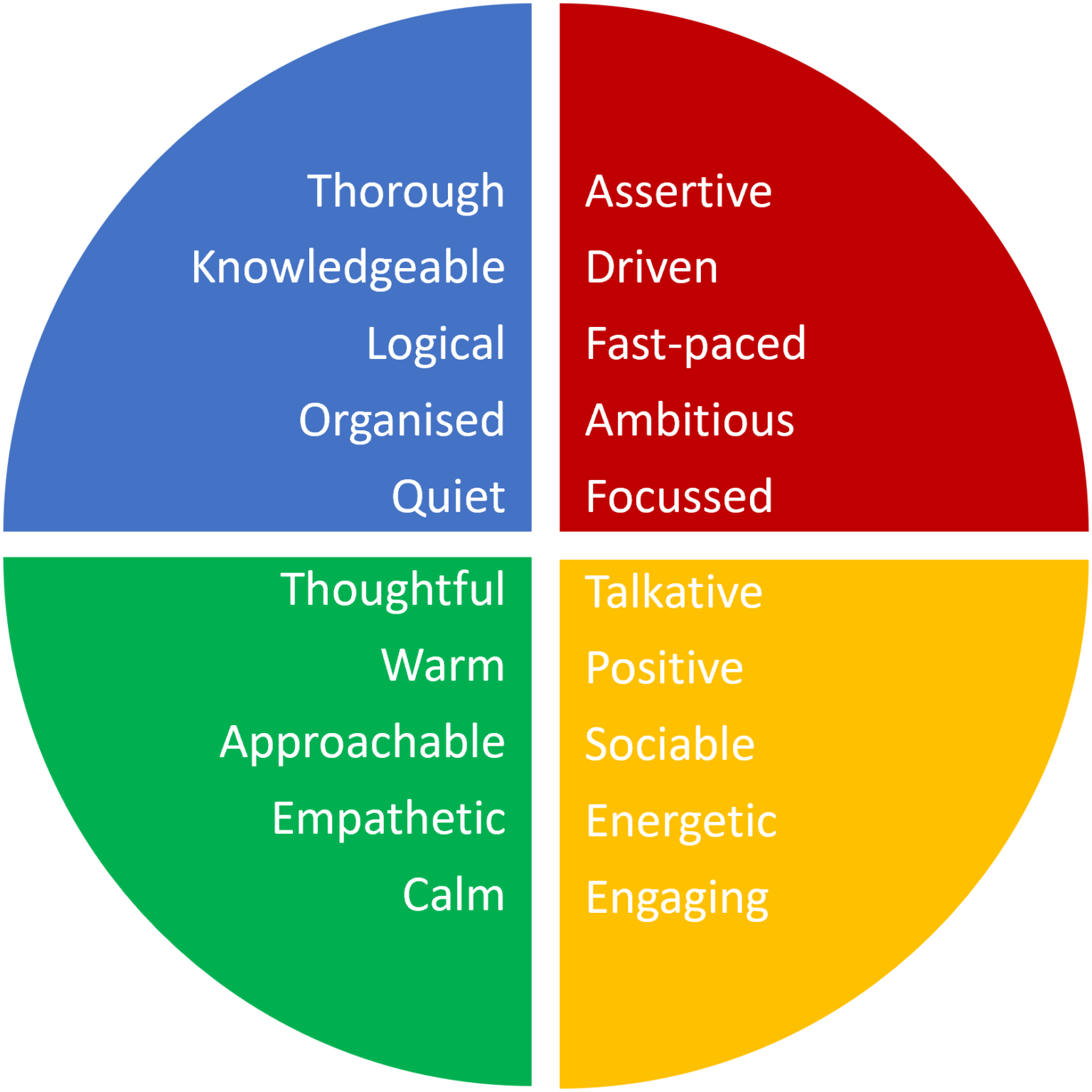
Points to note:
- We all have and can use all 4 of the colour energies
- Our life’s experiences will have developed preferences in ourselves, so we’ll each have a dominant energy, supported by a secondary, tertiary and least
- No one energy is better or worse than another
- Each colour energy has both strengths and weaknesses
- We tend to connect more easily with those who share a similar style to ourselves
- Within the model are ‘opposites’ – blue and yellow, red and green
- People whose order of colour preferences is opposite to mine look at the world and interact with it in a completely different way from me. We are therefore likely in the first instance to clash – we have different priorities and approaches, communication styles and needs, outlook on life as a whole, and find each other altogether ‘difficult’.
- Contradictorily, however, these are also the people from whom we can benefit the most. They can help us see things from a different angle and enable us to appreciate and value differences. They are our ‘check and balance’, the yin to our yang.
